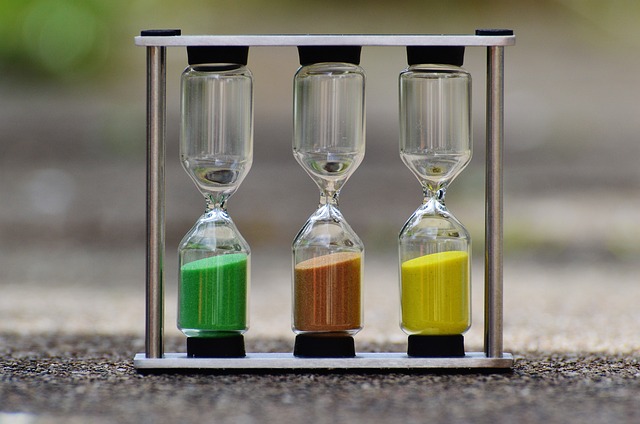
As evidenced by the Apple Watch on my wrist and the Food Diary sitting on my desk, I am a firm believer in if first you don’t succeed, try, try, again. When you fall down, you pick yourself up again. I’ve even managed to convince myself that I understand why if you fall seven times, you need to get up eight.
Although I’m not sure that I believe that failure is necessary for success or growth, I do believe in advice of Dale Carnegie:
“Develop success from failures. Discouragement and failure are two of the surest stepping stones to success.”
But I also know that failure only leads to success if you learn from your mistakes, and that the definition of insanity is doing the same thing over and over again but expecting different results. For some, the last quarter century that we have spent attempting to leverage state testing to improve public education with limited success and many failures is a prime example of that definition of insanity. Those people make a strong case, and I am more than willing to discuss the obvious limitations of education reform policy centered on test-based accountability.
From my perspective, in my fourth decade as an observer of state assessment programs (often from the inside looking out), the real insanity is that over and over again we continue to believe that this time we can improve the end-of-year state test enough that it will yield different results.
A huge part of learning from your mistakes and failures, in the words of a great American hero is “you’ve got to know when to fold ‘em.”
And although there is still a place (for now) for the end-of-year state test as an accountability and monitoring tool, it’s long past time to put to bed the notion that if we just make the a few tweaks, place the right carrots here and the right sticks there, that an end-of-year state test can serve as a model for classroom assessment, inform instruction and student learning, or even adequately measure student attainment of increasingly complex state content and achievement standards.
Enough is enough.
Time Flies
Can you believe that it’s been a decade since the Next Generation Science Standards were released in April 2013. That’s a long time.
And it was three years earlier in June 2010 that the Common Core State Standards were released and immediately adopted by states across the country.
In the very same week that the CCSS were released, Taylor Swift headlined her first stadium show at Gillette Stadium. This spring, she played her 11th, 12th, and 13th shows at Gillette stadium, just 3 of the 53 sold out stadium shows in the first leg of the phenomenon that is The Eras Tour, her 146-show triumphant grand march around the world.
Kids who were completing Kindergarten when the CCSS were released in June 2010 completed their first year of college this past year or have embarked on promising career path, assuming that they graduated high school college-and-career-ready.
That’s a whole K-12 generation of kids.
My daughter said she felt really old when the question of the day among a lot of those kids preparing for The Eras Tour this year was “In which of Taylor’s ten eras were you born?” I’ll tell you; nothing makes you feel older than your daughter telling you that something makes her feel old. (FYI, Taylor’s first era began about the same time as annual testing under NCLB.)
Thirteen years is also two generations for a set of state content standards, operating under a normal 5–7-year review and revision cycle.
It goes without saying that Taylor Swift has had a better 13 years than the CCSS.
Truth be told, we’re no closer today to developing an end-of-year state test to adequately measure the CCSS than we were in 2010 when Sec. Duncan heralded the next generation of state tests in his famous Beyond the Bubble Test speech (a speech, by the way, that challenges the maxim that you can easily find anything on the internet).
Not for a Lack of Trying
That fact that we don’t have a state test up to the task of measuring the CCSS is not for a lack of trying. PARCC, Inc., in collaboration with most of the top state assessment people in the country, topflight assessment contractors, and a world class Technical Advisory Committee, leveraged unprecedented support from the federal government and other sources to produce a damn fine state assessment program, arguably one of the best we have ever seen.
Ultimately, however, what PARCC proved beyond a shadow of a doubt about assessing standards as complex as the CCSS is that it cannot be done with an on-demand, end-of-year test. It became apparent almost immediately that PARCC was simultaneously too much and not enough. Too much test for schools to administer in a traditional testing window. Not enough test to measure the depth and breadth of the standards.
The takeaway for the field should have been that if PARCC couldn’t do it, it can’t be done.
Many of the leaders of the PARCC effort learned that lesson and are attacking high quality assessment and complex standards from a different direction, working more closely with schools on curriculum-embedded assessments or on developing and implementing a full-scale connected learning system for assessment, instruction & support. Others have shifted their talents to bigger education reform and equity issues such as early childhood education.
It doesn’t seem, however, that the field as a whole has gotten the message. If it had, then we would be seeing more assessment development efforts in line with the recommendations and conclusions of the 2014 National Research Council Report, Developing Assessments for the Next Generation Science Standards, which although written with the NGSS in mind apply equally well to the CCSS. Instead, what we continue to see are efforts to squeeze as much as possible (i.e., much too much) into the end-of-year state assessment box; efforts that are doomed before they get off of the ground to fall well short of stated and state goals.
Before I move on to the conclusion of this post, you may be wondering why I have not mentioned Smarter Balanced. The reason is simple. With regard to the end-of-year state test, Smarter Balanced accomplished exactly what that consortium of states wanted to do. They built a nice little test that is a more than adequate indicator of student proficiency on the CCSS. And they successfully introduced computer adaptive testing into state assessment, perhaps their most significant contribution to state testing. Let’s be clear, however, that from the beginning, the Smarter Balanced states were not trying to build a test that fully measured student performance on the CCSS in the same way that the PARCC consortium was.
And it’s very possible that the type of test that Smarter Balanced built is the best that we can do, or more accurately, the most that we should try to do with an end-of-year state test.
The Next Generation of Next Generation Assessments
“Only those who dare to fail greatly can ever achieve greatly.” – Robert F. Kennedy
As I said above, I don’t know whether failure is always a prerequisite for success, but in this case, I do believe that we (the big collective “We”) needed PARCC to dare to fail in its attempt to do something great, to make it clear that we need to move in a different direction in order to actually have a chance at achieving all that Sec. Duncan laid out in his 2010 speech with the next generation of state testing.
Now that we realize why PARCC was destined to be a “successful failure” we need to put our pencils down (metaphorically) and stop trying to build the next scaled up, or worse, scaled down version of PARCC.
- We need to acknowledge the limited, but critical, role that end-of-year, on-demand assessment can still play in monitoring student and school progress in support of accountability efforts; whether that end-of-year test is a stand-alone test, a test like Smarter Balanced envisioned as one component of a broader system of assessment, or a more traditional commercially-developed “interim” assessment administered as part of a through-year assessment system. As my colleague Marianne Perie wrote earlier this year, “we need to narrow the focus of the assessments back to their original intent.”
- We need to recognize that the information about student performance on complex content and achievement standards can only come from assessment (as distinguished from assessments) embedded in schools with teachers and students and fully integrated into curriculum and instruction.
- We need to determine the optimal role for the state in supporting that type of assessment, accepting that few states, if any, will be in the business of building complex assessment instruments from scratch. Technology and the complexity of the standards have taken us well beyond the era of DIY state testing.
- We need to recognize that gathering the information the state needs for accountability is better viewed as a data collection problem than as a measurement problem and focus our resources on the determining the best way to collect the data that states need – undoubtedly, data from multiple sources.
- Finally, we need to calm down. We’ve all learned the lesson that stressin’ and obsessin’ ‘bout state testin’ is no fun and only distracts attention from the real barriers to education reform.
 Embrace the Absurd