
What’s Next? It’s a question that has been at the core of criticism of state tests more than a decade and one that is central to current definitions of high-quality, instructionally useful assessment. But if such a fundamental question has been so difficult to answer for so long, perhaps we need to look beyond tests and assessment for both the answer and the source of the problem.
Author Archives: Charlie DePascale
Doing It Right This Time

Today, I am giving a presentation at the 51st annual IAEA Conference in Toronto titled, “Capitalizing on AI to Build the Human Instructure Necessary to Sustain State-Sponsored School-Based Assessment.” The translated version: Let’s use AI to solve the biggest issues that derailed previous attempts at assessment innovation – supporting the humans whom we tasked with implementing, interpreting, and using those innovations to improve instruction and student learning. In short, let’s do it right this time.
F-L-A-T: A Reading Story
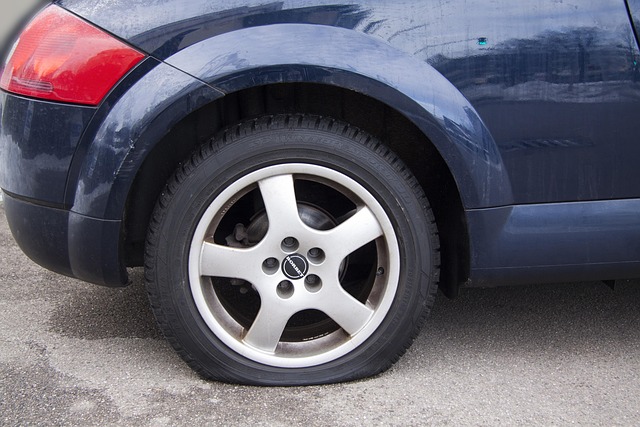
FLAT has been the operative word to describe reading in the United States. FLAT achievement over the past several decades. Most initiatives aimed at improving reading and reading instruction have fallen FLAT. Even the message proclaimed by advocates of the science of reading may be becoming FLAT as policies try to move practice beyond the committed early adopters, innovators, and champions. In this week’s post I attempt a close read of the reading problem. Maybe it’s just hot air or perhaps I can pump new life into the discussion
Back Where It All Began

Today, my wife and I celebrate our 42nd wedding anniversary. A wonderful journey that began with a 125-mile drive through a rainstorm to attend a Barry Manlier concert at Tanglewood.
Danger! Steep Grades Ahead

A clear sign of the start of a new school year is the uptick in posts about grades and grading. Across platforms, thoughts are being shared on grade inflation, fair and equitable grading, and opinions offered on perennial debates over grading formative work during instruction, retakes, and assigning 0’s. After letting all of these thoughts and words wash over me, I arrived at this conclusion:
Grading is complicated but it is only the tip of the iceberg. If we hope to support assessment in the service of learning, we are going to have to close huge gaps between our relatively straightforward world of psychometrics and large-scale testing and our understanding of the complex world of schools, teachers, and students.
Competencies – I Can See It Now
I have watched approaches like standards-based grading, microcredentialing, and competencies ebb and flow over the past couple of decades, but the slow but steady movement has always been in one direction; that is, from abstract to concrete. Today, as we stand on the cusp of a new era of assessment it seems to me that the journey is nearly complete. Latent traits, once the staple and foundation of educational measurement have been set aside in favor of clearly defined observable skills. On the surface, it may seem like I am making a distinction in search of a difference. However, that distinction may be the crux of the difference between assessment of learning and assessment for or in service of learning. And the implications for measurement, testing, and how we report results are quite real.
Psychometricians: Oh, The Humanity!

In today’s post I ponder a question that has vexed many of us for years: Are psychometrician’s human? You smirk, but who among us after attempting to converse with a psychometrician during a meeting break or conference reception hasn’t walked away thinking that they just engaged in a Turing Test – and not a very good one at that. Of course, in today’s emerging AI world, the real question of interest is not whether psychometricians are human, but the extent, if any, to which they must be. Not surprisingly, ultimately the answer leads to the question of what you mean by psychometrics.
A New Look at the “Moon and Stars Above”
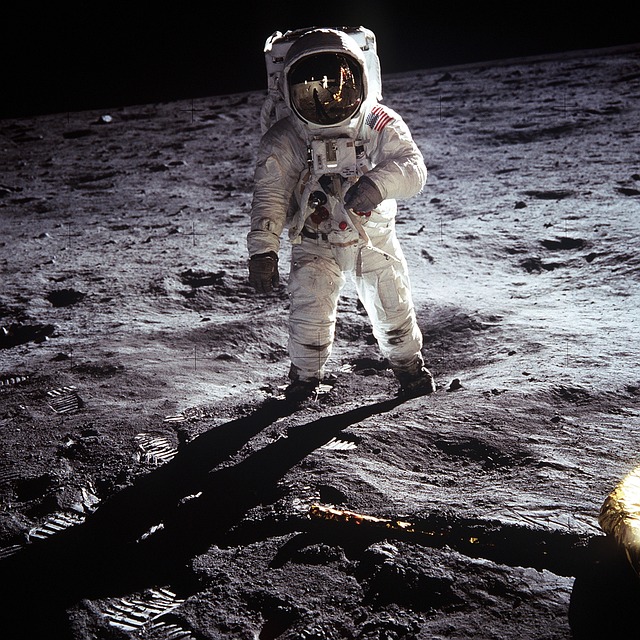
Happy Moon Day! At one time I dreamed of being an astronomer, but ended up an assessment specialist. Three Moon Days ago in a post titled “Moon and Stars Above” I asked the question, “How far afield is a career in state testing from staring off into the night sky and asking why?” I reflected on the challenges facing our field as we attempt to shift from large-scale testing (i.e., assessment focused on “the moon and stars above”) to assessment focused on instruction and individual students. The challenges I noted three years ago remain the same. With the emergence of AI, however, I think that it’s worthwhile reconsidering them on this Moon Day and asking why not.
The Midsummer Classic

Last night in Philadelphia the American League defeated the National League 4-0 in the 96th Major League Baseball All-Star Game. It’s still the best of the major professional sports all-star games. I’m afraid, however, that the game has long outlived its moniker, The Midsummer Classic. A point made only more clear by its position sandwiched on Fox television between two of the most important football games in the world, the Word Cup semi-finals. But in the end, I’m OK with that.
Pipe Dreams

“The USMNT will be good enough to compete in the World Cup.”
“Soccer will finally take off and become popular in the United States.”
“The Maine Democratic Party won’t shoot itself in the foot this election cycle.”
“Large-scale test results can be used to inform instruction.”
All of the above fit the classic definition of a pipe dream; that is, “an idea plan, or hope that is unrealistic, impractical, or nearly impossible to achieve.” The other critical component of each of those pipe dreams is that we are able to convince ourselves that it is achievable, repeatedly and often in the face of daunting evidence. Education policy, specifically policy related to assessment is rife with such pipe dreams. The questions I ponder this week, as we look to the future of assessment, is the extent to which pipe dreams are a necessary evil and when is it time to let go of them.

