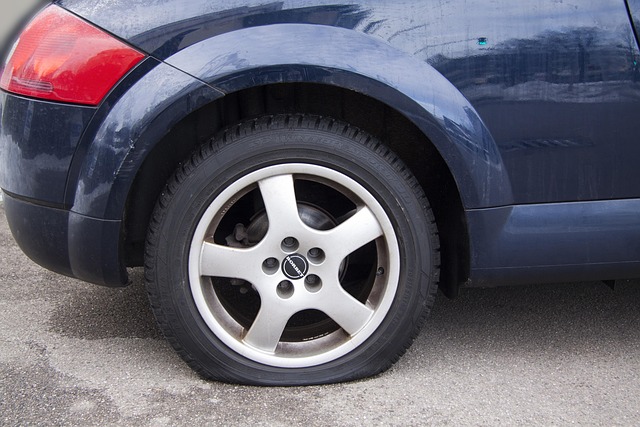
FLAT has been the operative word to describe reading in the United States. FLAT achievement over the past several decades. Most initiatives aimed at improving reading and reading instruction have fallen FLAT. Even the message proclaimed by advocates of the science of reading may be becoming FLAT as policies try to move practice beyond the committed early adopters, innovators, and champions. In this week’s post I attempt a close read of the reading problem. Maybe it’s just hot air or perhaps I can pump new life into the discussion
Tag Archives: education
Danger! Steep Grades Ahead

A clear sign of the start of a new school year is the uptick in posts about grades and grading. Across platforms, thoughts are being shared on grade inflation, fair and equitable grading, and opinions offered on perennial debates over grading formative work during instruction, retakes, and assigning 0’s. After letting all of these thoughts and words wash over me, I arrived at this conclusion:
Grading is complicated but it is only the tip of the iceberg. If we hope to support assessment in the service of learning, we are going to have to close huge gaps between our relatively straightforward world of psychometrics and large-scale testing and our understanding of the complex world of schools, teachers, and students.
Competencies – I Can See It Now
I have watched approaches like standards-based grading, microcredentialing, and competencies ebb and flow over the past couple of decades, but the slow but steady movement has always been in one direction; that is, from abstract to concrete. Today, as we stand on the cusp of a new era of assessment it seems to me that the journey is nearly complete. Latent traits, once the staple and foundation of educational measurement have been set aside in favor of clearly defined observable skills. On the surface, it may seem like I am making a distinction in search of a difference. However, that distinction may be the crux of the difference between assessment of learning and assessment for or in service of learning. And the implications for measurement, testing, and how we report results are quite real.
Psychometricians: Oh, The Humanity!

In today’s post I ponder a question that has vexed many of us for years: Are psychometrician’s human? You smirk, but who among us after attempting to converse with a psychometrician during a meeting break or conference reception hasn’t walked away thinking that they just engaged in a Turing Test – and not a very good one at that. Of course, in today’s emerging AI world, the real question of interest is not whether psychometricians are human, but the extent, if any, to which they must be. Not surprisingly, ultimately the answer leads to the question of what you mean by psychometrics.
A New Look at the “Moon and Stars Above”
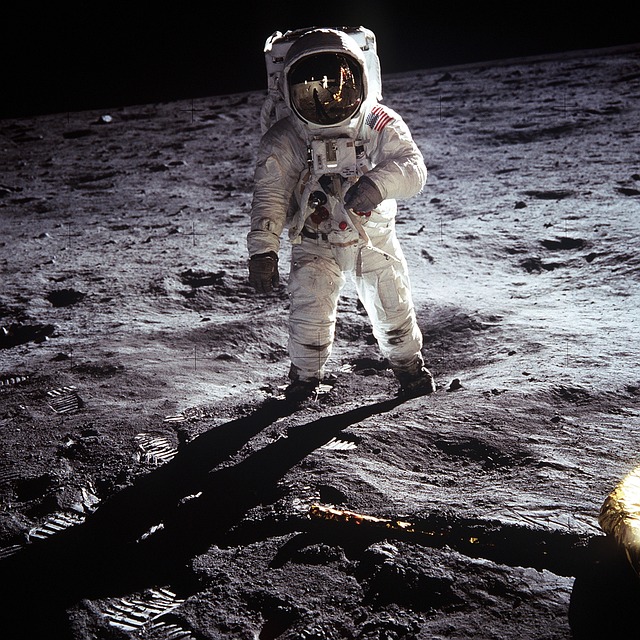
Happy Moon Day! At one time I dreamed of being an astronomer, but ended up an assessment specialist. Three Moon Days ago in a post titled “Moon and Stars Above” I asked the question, “How far afield is a career in state testing from staring off into the night sky and asking why?” I reflected on the challenges facing our field as we attempt to shift from large-scale testing (i.e., assessment focused on “the moon and stars above”) to assessment focused on instruction and individual students. The challenges I noted three years ago remain the same. With the emergence of AI, however, I think that it’s worthwhile reconsidering them on this Moon Day and asking why not.
Pipe Dreams

“The USMNT will be good enough to compete in the World Cup.”
“Soccer will finally take off and become popular in the United States.”
“The Maine Democratic Party won’t shoot itself in the foot this election cycle.”
“Large-scale test results can be used to inform instruction.”
All of the above fit the classic definition of a pipe dream; that is, “an idea plan, or hope that is unrealistic, impractical, or nearly impossible to achieve.” The other critical component of each of those pipe dreams is that we are able to convince ourselves that it is achievable, repeatedly and often in the face of daunting evidence. Education policy, specifically policy related to assessment is rife with such pipe dreams. The questions I ponder this week, as we look to the future of assessment, is the extent to which pipe dreams are a necessary evil and when is it time to let go of them.
Ten Numbers That Shook My World
We all have them. The images that we can never unsee. The quote, song lyric, or perhaps poem that we never forget. That friend, colleague, or chance interaction that had a profound impact on us. Having spent my life immersed in data, I guess that it makes sense that I also have a list of ten numbers or statistics that shook my professional world. I discuss those numbers in today’s “very special” blog post. That is, it’s way too long, but like Netflix, I give you the option to binge this as a naughty summer reading treat or to break up the 10 self-contained “episodes” on your own.
American Education: A Tangled Can of Monkeys

Try as I might, my mind just won’t let go of the story about the school year for Pawtucket, Rhode Island elementary school students being extended because it was discovered that the school day has been 5 minutes too short. From beginning to end, from regulation to problem to solution to acceptance, the issue in Pawtucket, is a microcosm of the complexities that are going to make it so difficult to reform public education in the United States.
Culture > Curriculum > Courses

As I leaf through excited posts and articles about how AI is going to help assess durable skills and bring to life the freshly painted portraits of high school graduates, I start to get an uneasy feeling in the pit of my stomach and a tightness in my chest. My fear is that once again we’re going to do this backwards, that is by beginning with assessment. It’s critical, particularly with these the types of skills that are being discussed today that we remember to consider curriculum before assessment and more importantly, culture before curriculum.
On Scales, Achievement Standards, and Trends

A bonus blog post in honor of #NCME2026 conference week. Last month I tugged on Superman’s cape when I suggested that preserving the NAEP trend might not be in our best interest. Today, I refresh a presentation from the early days of the CCSS, PARCC, and Smarter Balanced to clarify that reporting a NAEP trend is not the problem. Rather, the problem may be in the way that we in educational measurement and assessment tie trends to fixed achievement standards and scales.

