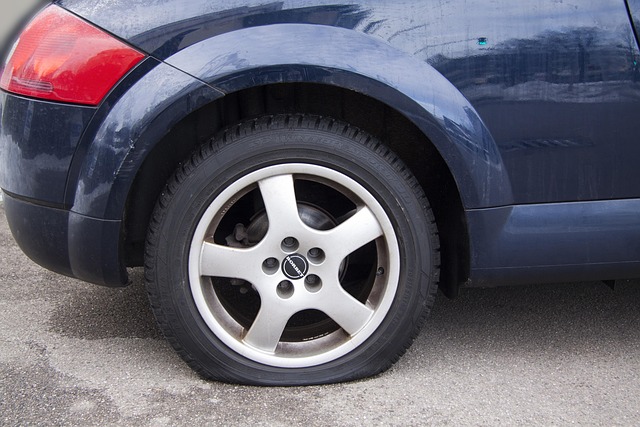
FLAT has been the operative word to describe reading in the United States. FLAT achievement over the past several decades. Most initiatives aimed at improving reading and reading instruction have fallen FLAT. Even the message proclaimed by advocates of the science of reading may be becoming FLAT as policies try to move practice beyond the committed early adopters, innovators, and champions. In this week’s post I attempt a close read of the reading problem. Maybe it’s just hot air or perhaps I can pump new life into the discussion
Tag Archives: Teaching
Danger! Steep Grades Ahead

A clear sign of the start of a new school year is the uptick in posts about grades and grading. Across platforms, thoughts are being shared on grade inflation, fair and equitable grading, and opinions offered on perennial debates over grading formative work during instruction, retakes, and assigning 0’s. After letting all of these thoughts and words wash over me, I arrived at this conclusion:
Grading is complicated but it is only the tip of the iceberg. If we hope to support assessment in the service of learning, we are going to have to close huge gaps between our relatively straightforward world of psychometrics and large-scale testing and our understanding of the complex world of schools, teachers, and students.
Competencies – I Can See It Now

I have watched approaches like standards-based grading, microcredentialing, and competencies ebb and flow over the past couple of decades, but the slow but steady movement has always been in one direction; that is, from abstract to concrete. Today, as we stand on the cusp of a new era of assessment it seems to me that the journey is nearly complete. Latent traits, once the staple and foundation of educational measurement have been set aside in favor of clearly defined observable skills. On the surface, it may seem like I am making a distinction in search of a difference. However, that distinction may be the crux of the difference between assessment of learning and assessment for or in service of learning. And the implications for measurement, testing, and how we report results are quite real.
A New Look at the “Moon and Stars Above”

Happy Moon Day! At one time I dreamed of being an astronomer, but ended up an assessment specialist. Three Moon Days ago in a post titled “Moon and Stars Above” I asked the question, “How far afield is a career in state testing from staring off into the night sky and asking why?” I reflected on the challenges facing our field as we attempt to shift from large-scale testing (i.e., assessment focused on “the moon and stars above”) to assessment focused on instruction and individual students. The challenges I noted three years ago remain the same. With the emergence of AI, however, I think that it’s worthwhile reconsidering them on this Moon Day and asking why not.
Ten Numbers That Shook My World
We all have them. The images that we can never unsee. The quote, song lyric, or perhaps poem that we never forget. That friend, colleague, or chance interaction that had a profound impact on us. Having spent my life immersed in data, I guess that it makes sense that I also have a list of ten numbers or statistics that shook my professional world. I discuss those numbers in today’s “very special” blog post. That is, it’s way too long, but like Netflix, I give you the option to binge this as a naughty summer reading treat or to break up the 10 self-contained “episodes” on your own.
Culture > Curriculum > Courses

As I leaf through excited posts and articles about how AI is going to help assess durable skills and bring to life the freshly painted portraits of high school graduates, I start to get an uneasy feeling in the pit of my stomach and a tightness in my chest. My fear is that once again we’re going to do this backwards, that is by beginning with assessment. It’s critical, particularly with these the types of skills that are being discussed today that we remember to consider curriculum before assessment and more importantly, culture before curriculum.
Assessing Assessment in April 2026

We’ve made it to April!
In the spirit of this season of rebirth and renewal, in this week’s TL: DR blog post I ponder and prophesy on the current state and future of our field.
#NAEP250 – It’s Trending

“All good things must come to an end.” In the third post of my NAEP by the Numbers series, I ponder historically, philosophically, and a little bit technically, on whether that time has come for something that many believe are very good things – the NAEP trend lines.
Frankenstein’s Graduate

In releasing the interim report outlining its new graduation Framework, Massachusetts boasts, “no other state will have implemented such a comprehensive approach to setting such high standards in education…”
My response, as the kids say, Sick brag, bro.
I’m not exactly sure where having “such high standards” compared to other states fits in the validity argument. I would be much more impressed by claims and evidence of having carefully identified the right graduation standards for the future and having a solid implementation plan for achieving those standards.
Regression To The Mean
Growth seemed to be a hot topic this month, so I set out to write a blog post about student growth and how it should be (and shouldn’t be) used in school accountability systems. Then I read the Senate HELP committee’s RFI. When my blood pressure returned close to normal, my topic had changed. I had expected and can even accept the “school choice” vibes that ran through the RFI. What I cannot stomach, however, is the return to misplaced blame and outright meanness that helped derail the last 25 years of Education Reform.

