My memory of reading begins with the word FLAT. It was early in first grade and our eager class of 30 was learning to read and spell. I’m sure that I encountered books and reading prior to that fateful fall Friday in 1965, but for better or worse that’s the day and the one word, FLAT, that stands out.
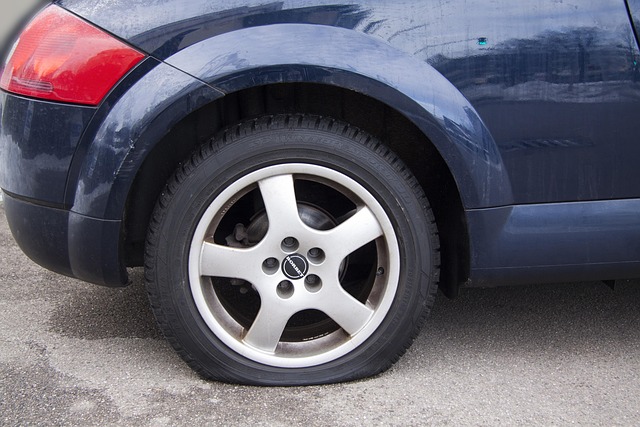
After school, our family of four piled into the two-door Plymouth for the 9-mile, 30-minute drive just outside the city to my aunt’s house and a weekly visit with my cousins. After a dinner of spaghetti and scallops, the kids settled down in front of the TV and our parents began their evening of whist and wine for the women. On that night, I looked out the window and announced to my father that the tire on our car was F-L-A-T. With a panicked look on his face, Dad rushed to the window, saw that the tire was fine, and as I remember it, hilarity ensued. On Monday, the story made its way to my first grade teacher and then Miss Lydon had me retell it to a visiting district administrator. I had learned a lesson about the power of words and of a well-placed one-liner. A gold star for me.
Little did six-year old Charlie know that FLAT would become a key word in describing reading achievement in the United States. As in, despite billions of dollars in federal spending and decades of education reform, reading scores remain flat– flat as a pancake.
As that line of first-graders wound its way around the classroom, waiting for our turn to sound out and name the letter on the flash card, I had no idea that we were on the front line of a reading war which apparently has raged for centuries. We were unknowing participants in what Jeanne Chall described as “The Great Debate” over Learning to Read. Also, apparently, our first-grade curriculum in the Boston Public Schools was influenced by Chall’s research, even as she was just settling into her new position across the river at Harvard.
Like many of the classrooms Chall encountered in her studies, students in our class experienced a hybrid approach to reading instruction. Sure, we had our fun with Dick and Jane and we saw Spot run – run Spot, run. But we also had a constant 360º view of the alphabet, each letter (uppercase and lowercase) presented on cards that formed a cardboard upper frieze on our classroom wall, sitting just above the blackboards and bulletin boards. We snaked our way along those walls until it was our turn with Miss Lydon and the flash card and then we gathered in our small reading groups. And, of course, we also had silent reading with our SRA box and its color-coded story cards. A hodgepodge, scattershot approach to teaching reading or the best of both worlds? The debate rages on.
Learn To Read To Learn
My thoughts turned to Jeanne Chall and my own experiences with reading instruction earlier this summer after attending a webinar, The Third Grade Reading Myth: What ‘Learn to Read, Then Read to Learn” Gets Wrong. In that webinar, Rebecca Kockler, whom I first encountered as one of the dynamic team working with John White in Louisiana, explained why “Learning to read in K-2 and reading to learn in 3-5 is a dangerous and unhelpful view of reading.” I’ll try not to misrepresent her argument, but my simple takeaway is that although there is a decoding threshold that students need to reach by the third grade, explicit instruction in decoding and reading, in general, must continue well beyond third grade as students. She provided examples of decoding becoming more difficult as students encounter more complex words and text.
The continued need for decoding and reading instruction shouldn’t be a surprise.
It doesn’t take an expert in the science of reading to know that English and its spelling conventions, or lack thereof, is weird. How it must weigh on our conscience that we find ourselves reduced to seizing on insufficient memory tricks such as “I before e except after c, or when sounded like ‘ay’. As my father-in-law, who emigrated to the United States from Italy after World War II, was always quick to point out, they didn’t have to teach spelling in Italy (where letters or combinations of letters have a fixed sound).
Myth-Busting
Kockler’s argument was compelling, and I have no doubt (sadly, none at all) that there are countless classrooms and curricula where instruction in decoding and reading, more generally, effectively ends in third grade. Nevertheless, I found myself troubled by a gut feeling that my understanding of “the third grade reading myth” was incomplete.
Even someone as far removed from reading instruction as I am is familiar with the phrase and concept of learning to read and then reading to learn, a transition that occurs somewhere between grades 3 and 4. As a state testing specialist I am well aware of promotion policies tied to student performance on the state’s Grade 3 Reading Test and the ways in which state tests in reading (or English language arts) change between third and fourth grade. But what does “learning to read and reading to learn” really mean, where did it come from, and why?
For the answer to those questions, I turned to another of Jeanne Chall’s classic works, Stages of Reading Development. It is in the transition from Chall’s first two stages of learning to read (Decoding and Fluency) to stage 3, “Reading for Learning the New: A First Step” that the phrase and the third grade myth are born. There are, however, a few critical elements of Chall’s stages that are lost in the pithy slogan and its consequences.
- As each stage subsumes previous stages, Chall makes it clear that decoding never stops. “The learning and use of correspondences between spoken and written words continues in Stage 2 and other stages…, for proper names and for new words not immediately recognized, and, in fact, it continues during Stages 3, 4, and 5.” (p. 25). She notes that during Stage 5 [i.e., college] “decoding is used for reading foreign names, new technical words, and new alphabetic foreign languages.”
- While Stages 1 and 2 involve acquiring new reading skills fair quickly between first and third grade, Stage 3 continues until the beginning of high school and Stages 4 and 5 of Reading Development continue into college. In other words, perhaps there is a good reason why English appears to be the only subject universally required every year by states for all students in Grades K-12.
- What we miss when we reduce Stage 3 to “Reading to Learn” is the importance of “the New.” To Chall, the key distinction between stages is that in Stage 3, for the first time reading is beginning to compete with watching and listening as the means by which children acquire new information. At the beginning of Stage 3, reading still lags behind the other two modes and, in fact, does not become the most efficient means of acquiring new information for most students until they reach high school.
I readily acknowledge that Chall’s theory and stages of reading development are more complex and nuanced than I have attempted to describe here; but my feeble attempt is still exponentially more informative and useful than reducing her work to a catchphrase: “Learn to Read and then Read to Learn” – especially when in our world of elevator pitches and bullet points the catchphrase because the driver of policy, curriculum, and instruction.
Come Out of Your Half-Dreamed Dream
It should come as no surprise that in turning theory to practice, we have gutted Chall’s theory and stages of reading development. The field of education is perhaps the world’s biggest and most consequential game of telephone. The gap between theory and practice in education are as least as large as any resulting achievement gaps. Then there is the equally large gap between intended practice and actual practice. Fidelity of implementation is connecting link, you will find in the Limitations Section of all articles describing research on educational interventions.
As a field, we may be accused of having devoted more time to coming up with terms to describe the difference between what was intended and what is actually occurring than we have spent trying to close the gap. Look no further than all our many modifiers of curriculum: implemented, enacted, operational, achieved/learned, received, hidden, and null (to name a few).
Kockler and others are right to be fighting the “myth” that has become the reality in schools and classrooms. We have to meet the enemy where they lie. As others have noted recently, however, we also have to do a much better job of preventing so many educational myths from being formed and becoming reality. We need much better communication between theorists and practitioners who often don’t speak the same language; and a much better job in translating research into practice, whether with regard to reading instruction, curriculum, assessment, or a host of other topics.
All The World’s A Stage
At the same time, we have to acknowledge that nothing stays the same, the world is constantly changing.
The period between Chall’s seminal works Learning to Read and Stages of Reading Development overlap nicely with my own reading development in elementary, secondary, and postsecondary education from 1965 to 1983. At Boston Latin School, as seventh graders we had an extra 3 periods per week of English Enrichment on top of our daily English class. In ninth grade, we blushed while learning to read about roses, but by twelfth were knee-deep in Joyce’s crimes against fecundity, perverse madonnas, smells, and sounds; and most of us probably still feel a bit awkward when we walk into a barn. Most important, as Chall described, we became much more efficient in acquiring information (all kinds of information) and viewpoints (all kinds of viewpoints) from reading.
In reality, however, we had little choice but to turn to reading as our source for new information.
Three network TV channels plus PBS and a UHF station for sports and the Three Stooges. LPs and cassette tapes, the Top 40 on AM radio, and a weekly (at most) trip to the movie theater. Not a lot of options to compete with reading.
Watching and listening accepted the challenge, expanding, adapting, reinventing themselves. Ultimately, much more efficient means of acquiring information today than they were in the mid-80s. Even staking a claim in reading’s realm with audiobooks.
Are they more efficient than reading? Some say no, but the gap is closing and the argument is not settled.
Perversely, as options for watching, listening, and also reading, have expanded exponentially, it has also become much easier to limit oneself to exposure to a single viewpoint – early Stage 3 – and to confirm existing knowledge – Stage 2 – rather than reading to learn new.
If we want to unflatten reading achievement, the science of reading will not be sufficient. We will also have to figure out a way to take on the myths and the realities.
Image by Stefan Schweihofer from Pixabay

