
Today, I am giving a presentation at the 51st annual IAEA Conference in Toronto titled, “Capitalizing on AI to Build the Human Instructure Necessary to Sustain State-Sponsored School-Based Assessment.” The translated version: Let’s use AI to solve the biggest issues that derailed previous attempts at assessment innovation – supporting the humans whom we tasked with implementing, interpreting, and using those innovations to improve instruction and student learning. In short, let’s do it right this time.
Category Archives: Assessment
Danger! Steep Grades Ahead

A clear sign of the start of a new school year is the uptick in posts about grades and grading. Across platforms, thoughts are being shared on grade inflation, fair and equitable grading, and opinions offered on perennial debates over grading formative work during instruction, retakes, and assigning 0’s. After letting all of these thoughts and words wash over me, I arrived at this conclusion:
Grading is complicated but it is only the tip of the iceberg. If we hope to support assessment in the service of learning, we are going to have to close huge gaps between our relatively straightforward world of psychometrics and large-scale testing and our understanding of the complex world of schools, teachers, and students.
Competencies – I Can See It Now
I have watched approaches like standards-based grading, microcredentialing, and competencies ebb and flow over the past couple of decades, but the slow but steady movement has always been in one direction; that is, from abstract to concrete. Today, as we stand on the cusp of a new era of assessment it seems to me that the journey is nearly complete. Latent traits, once the staple and foundation of educational measurement have been set aside in favor of clearly defined observable skills. On the surface, it may seem like I am making a distinction in search of a difference. However, that distinction may be the crux of the difference between assessment of learning and assessment for or in service of learning. And the implications for measurement, testing, and how we report results are quite real.
Psychometricians: Oh, The Humanity!

In today’s post I ponder a question that has vexed many of us for years: Are psychometrician’s human? You smirk, but who among us after attempting to converse with a psychometrician during a meeting break or conference reception hasn’t walked away thinking that they just engaged in a Turing Test – and not a very good one at that. Of course, in today’s emerging AI world, the real question of interest is not whether psychometricians are human, but the extent, if any, to which they must be. Not surprisingly, ultimately the answer leads to the question of what you mean by psychometrics.
A New Look at the “Moon and Stars Above”
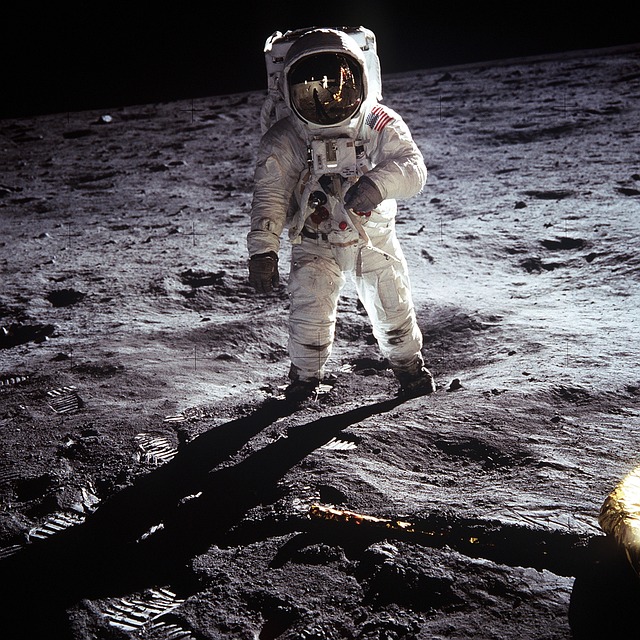
Happy Moon Day! At one time I dreamed of being an astronomer, but ended up an assessment specialist. Three Moon Days ago in a post titled “Moon and Stars Above” I asked the question, “How far afield is a career in state testing from staring off into the night sky and asking why?” I reflected on the challenges facing our field as we attempt to shift from large-scale testing (i.e., assessment focused on “the moon and stars above”) to assessment focused on instruction and individual students. The challenges I noted three years ago remain the same. With the emergence of AI, however, I think that it’s worthwhile reconsidering them on this Moon Day and asking why not.
Showing Some Love for the OG NAEP

It’s common knowledge that for technical and practical reasons I’m not a big fan of preserving NAEP trends. I’m a little suspect of trying to stretch test scales across decades back to the 1990s, let alone back to the 1970s. That being said, I’m also one who respects history and lineage. And as we emerge from Father’s Day weekend, it’s appropriate to take a little time to pay homage to the “father” of the current NAEP assessment and those who championed its cause. I think that it’s safe to say that without the solid foundation laid by the NAEP Long Term Trend assessment, the Main NAEP with its state-level results wouldn’t have gotten off the ground in the 1990s.
Ten Numbers That Shook My World
We all have them. The images that we can never unsee. The quote, song lyric, or perhaps poem that we never forget. That friend, colleague, or chance interaction that had a profound impact on us. Having spent my life immersed in data, I guess that it makes sense that I also have a list of ten numbers or statistics that shook my professional world. I discuss those numbers in today’s “very special” blog post. That is, it’s way too long, but like Netflix, I give you the option to binge this as a naughty summer reading treat or to break up the 10 self-contained “episodes” on your own.
Assessment ________ Learning

The relationship between assessment and learning is one that we’ve been struggling to understand for as long as I can remember. Before we jump headlong into reimagining assessment, it will be beneficial to clarify what we mean by both terms as well as the relationship(s) between them.
Let’s begin with a simple filling in the blank item: Assessment ______ Learning.
The Tale Of The Tape
All signs suggest that we might finally be emerging from our decade-long period of malaise regarding large-scale testing. Advances in AI, flexibility from the feds, and new buckets of money are making people giddy. Happy Days Are Here Again! In such heady times, however, it’s critical that we step back and take a sober look at our place in the education world.
To Those Burrs In Our Saddle

I truly enjoyed reading the many posts describing the amazing work showcased at NCME in LA; and the positive, uplifting experience that the conference was for everyone. But in this week’s post I want to acknowledge the contribution of those who take it upon themselves to poke, prod, and noodge at every presentation and in response to every post. It takes a village and they are part of ours.

