When am I ever going to use this?
It’s a question that I still ask myself several times per week as my quest to reclaim the house from three decades of cumulative clutter enters its fourth year. Following a modified version of the KonMari Method, I have cycled through clothes, books, and papers three times, yet to attack the mother lode of sentimental items – which, of course, also consists largely of clothes, books, and papers (enough of each just from the 2004 Red Sox championship and that 28-3 Patriots comeback to fill a couple of bins).
The bottom line is that my Modified KonMari Method is going about as well as any of the Modified Angoff and Bookmark Methods I used over the years – not very well.
I went back and reviewed Marie Kondo books and videos to figure out what I was doing wrong. (Online by the way, so at least they’re not contributing to the clutter.) It did not take long to find my mistakes, unlike trying to find anything in my office.
- I had not fully committed myself, my time, and the resources needed to the process of tidying up.
- Although the purpose of decluttering seems self-evident, I had not clearly defined the goal. I had not envisioned my ideal lifestyle – to be able to sit in my Carolina rocking chair under a reading lamp with one of my remaining books; to have a clear surface to use for drawing, wall space to hang my photos, and space to display those sentimental things that bring me joy.
- And, most importantly, I was not asking the right question.
Asking myself When am I ever going to use this? is not the same as asking “Does this spark joy?”
Perhaps it’s the difference between a deficit mindset and a growth mindset. I’m not sure, I’ve never really understood those.
I do know, however, that “When am ever going to use this?” has rarely been the right question to ask. It wasn’t the right question when I was a teacher. It wasn’t the right question when I was a student. And the way it has been asked and by whom, it isn’t the right question with regard to state testing. Or as with my decluttering efforts, it’s not the only or most important question to ask.
School Days, School Days …
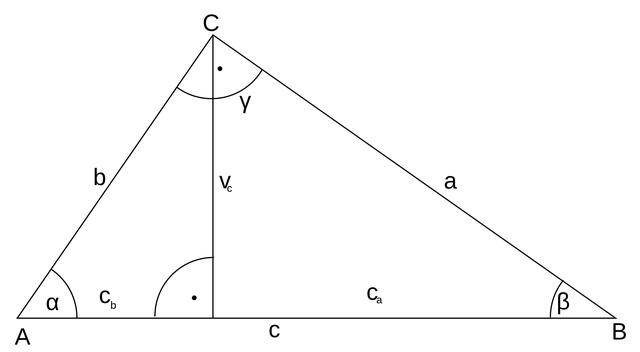
My years as a mathematics teacher were spent at Don Bosco Technical High School in Boston. Students’ time was equally divided between their “shop” (e.g., electronics, graphic arts, construction, etc.) and academic subjects. One morning, I observed a group of students practicing their surveying skills on the plaza in front of the school. After lunch, in the middle of a lesson on right triangle trig, one of those students raised his head (but not his hand) and asked me, “When am I ever going to use this?” As I stood there in shock, mouth open, seeking just the right words to answer him while simultaneously pondering alternative career options for myself, one of his classmates succinctly, yet colorfully, explained that he had been using right triangle trig all morning.
The original student’s response, “I’m going to play professional hockey.”
There wasn’t much more teaching or right triangle trig in my future.
As for the student, he didn’t make it to the NHL. I have no idea how much surveying and right triangle trig was in his future.
(Note: Although “professional athlete” is rarely a solid career plan, Massachusetts does rank #4 among states and Boston #3 among cities in producing NHL players, behind only Minneapolis and Detroit. And hockey was the best pathway to college for some of our students.)
Dear old golden rule days
Thinking back on my own time as a high school student, the question didn’t came up much at all. It certainly didn’t come up during all those years translating Latin sentences and texts to English and vice versa. Never using that particular skill was a given.
It wasn’t a question I asked while reading Camus’ L’Etranger (The Stranger) in French or Joyce’s Ulysses in what they told us was English. It didn’t even come up while reading Longfellow’s epic poem Evangeline – This is the forest primeval. The murmuring pines and the hemlocks…
Now, growing up in Boston, I was quite familiar with Longfellow’s Midnight Ride of Paul Revere. And I could connect with the Village Blacksmith – a mighty man is he – through that lone chestnut tree in our neighborhood. But a forest primeval? Sorry, nope. Still, I didn’t ask.
Even as a psychometrician, turns out I didn’t have much need for AP Calculus after high schooI, which reminds me: It’s time to dump the current mindset that makes progressing through AP Calculus and similar courses pretty much mandatory for any student hoping to attend an elite college regardless of whether they will ever use calculus or take another mathematics course again. The practice, often defended in the name of rigor and perseverance, benefits no one, with the possible exception of the College Board, and is largely based on a false premise. First-year calculus, for example, is not all that rigorous and presents problems that can be solved fairly easily and more efficiently with a good Do Loop. #kidswhocode
Fact is, no one really knows what specific content is going to be useful in 5, 15, or 25 years.
Perhaps I never did use much of that Latin or French, but surprisingly, Longfellow and Evangeline loomed large…
When I made my way over to Harvard Square for the first time to pick up the extra credit for visiting Longfellow’s house in Cambridge, I had no idea I would be making that same subway ride through four years of college – from freshman orientation to that final Red Line ride home carrying my cap, gown, and diploma. I had no idea Longfellow would be there waiting for me when I made my way to Minneapolis for graduate school, nestled in the park along with Hiawatha and Minnehaha, just across the street from the Dairy Queen. Or that he would be sitting there again in Longfellow Square when I accepted that ill-fated central office position with the Portland Maine Public Schools. And 9th-grade Charlie wouldn’t have believed you if you told him he would spend 30+ years, tucked away in a cluttered colonial in Maine, surrounded by those murmuring pines, hemlocks, and a few white birches.
Even Evangeline provided me with some historical context for working in and with Louisiana my last few years at the Center. Geaux Tigers!
Longfellow, of course, is not the point. The point is that you just don’t know. And if you don’t know, it’s probably a good thing that my classmates and I didn’t even think about asking the question, “When am I ever going to use this?”
There were so many more important questions to be asked and answered during high school, and our teachers managed to keep us engaged without pandering to our pedestrian teenage instincts and interests.
Beyond the basics in reading, ‘riting, and ‘rithmetic, perhaps the rest of the PK-12 curriculum really is best focused on the dear old golden rule and producing solid citizens who possess good judgment and character. We may not agree on what that entails, but that question is one worth asking and answering.
I don’t mean to suggest that I am opposed to high school students engaging in an area of specialization or following a pathway associated with their emerging interests and career plans. We do, however, need to maintain balance between preparing students for jobs, preparing students to prepare for jobs that may not yet exist, and preparing students to be productive members in and stewards of society.
Remember when a key goal of the Common Core was fewer content standards. As we strive harder to declutter the curriculum, there are a few questions we should be asking:
- What do we mean by college-and-career-readiness?
- When you picture the knowledge and skills possessed by the kids crossing the stage to receive their diplomas, what will bring you joy?
- What’s the ideal vision of a high school graduate that we are trying to promote?
My educated guess is that your answers to those three questions won’t be filled with specific content and references to content standards.
Of course, I cannot end a post titled When am I ever going to use this? without including a couple of words on state testing.
Never. Stop Asking.
When teachers ask, “When am I ever going to use this?” with regard to state test results our tendency is to stand their tongue-tied, as I did with my Geometry student back in the day. However, the answer is really pretty simple.
If you are a teacher asking, when am I ever going to use these end-of-year state test results to improve instruction for my current students, the answer is:
NEVER. Stop asking.
Same goes if you are someone trying to respond to a teacher asking that question.
Never Stop Asking
In response to more general questions about the purpose and use of state testing, the answer is still simple:
NEVER stop asking.
Never stop asking why are we administering this test? Who is going to be using the results? How are they going to be using the results? What information do the really need and what is the best way to collect it for them?
It’s easy to stop asking questions when it seems that the answer is always, “It’s required by federal legislation.” If I took away one thing from all of that reading in English, Latin, and French in high school, however, it is that’s when it’s most important to never stop asking.
Image by Gerd Altmann from Pixabay
 Embrace the Absurd
One thought on “When am I ever going to use this?”
Comments are closed.