Football long ago passed baseball as the national pastime, only to be surpassed itself by gambling on football and this past year by watching Taylor Swift watch football.
Nevertheless, there is still only one Opening Day!
My first Opening Day was April 10, 1968, a few weeks shy of my ninth birthday. The game had been delayed a day for the funeral of Martin Luther King, assassinated the previous week. LBJ had just announced he would not seek reelection in the face of mounting protests over the war in Vietnam. We anxiously awaited the first manned space flight since the tragedy of Apollo 1, fourteen months prior.
The country was in turmoil, and so were my Red Sox. Opening Day found them without reigning Cy Young winner pitcher, Jim Lonborg, injured in a skiing accident, and star outfielder Tony Conigliaro, still a year away from trying to mount a comeback after being hit in the face by a pitch the previous August.
But it was baseball.
I had attended my first Red Sox game the previous July, a 10-0 loss to Baltimore, their final loss before an improbable 10-game winning streak that catapulted this Impossible Dream team from fifth to second place and ultimately to their first pennant in 21 years. A heartbreaking Columbus Day loss in Game 7 of the World Series did nothing to dull my love for the Sox and the game. I was hooked.
I played in my first little league game on May 1st – a 5-3 win to kick off my highly successful, but very brief, four-year career in organized baseball. We finished that New England-abbreviated season 5-1. The Red Sox finished their first month of the season 8-8, a harbinger of my 37-year wait to see them finally win the World Series.
But for me and my little band of baseball brethren, there was more to baseball than listening to the Red Sox on the radio, playing in little league, or any of the variations of the game we played on our Dorchester side streets – wiffle ball, stick ball, half ball, step ball, and, of course, pickle (curb to curb or manhole cover to manhole cover).
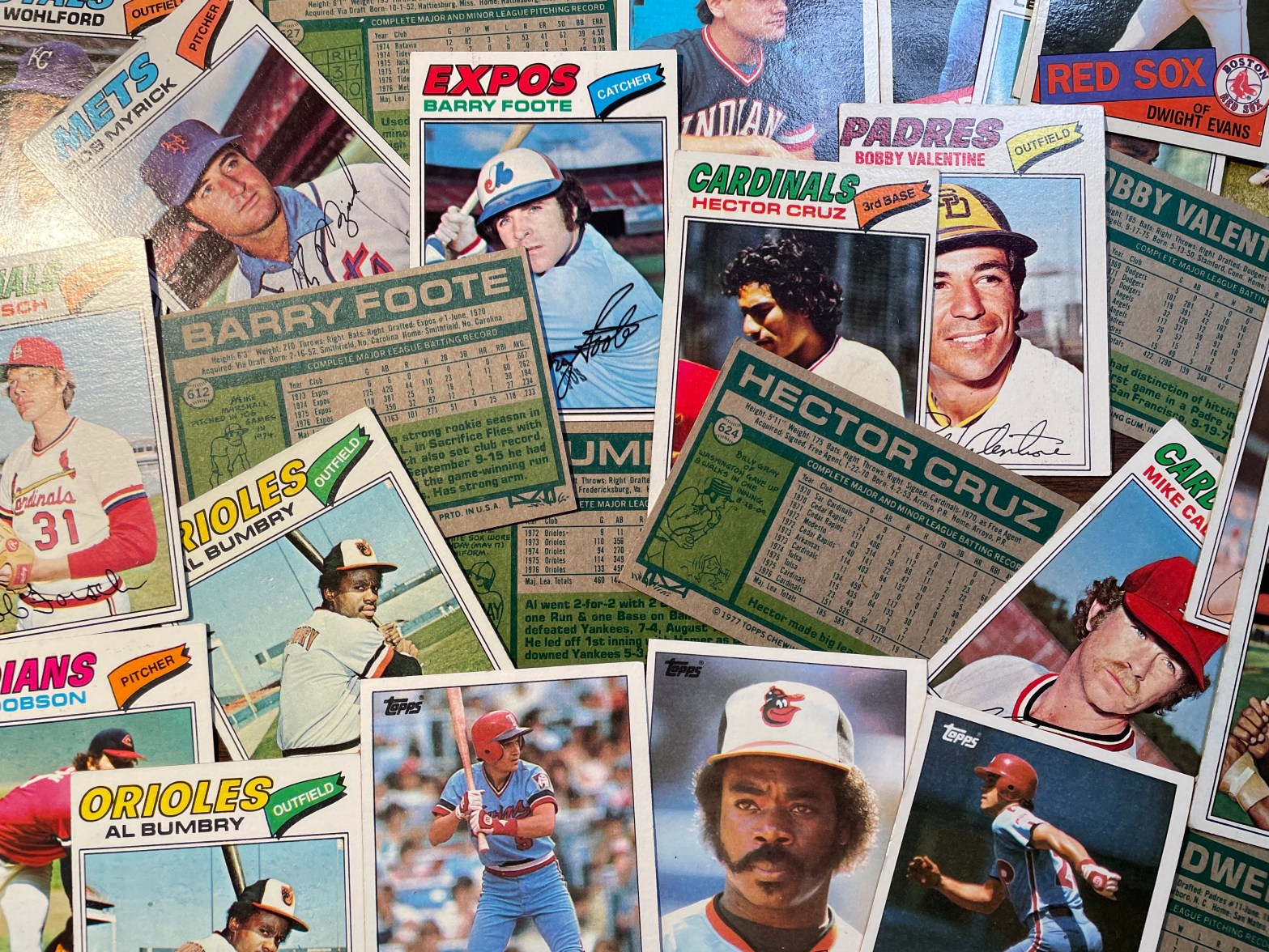
There were baseball cards
We took our nickels and dimes to Joe’s – the tiny (and I mean tiny) hole-in-the-wall variety store tucked into the corner of Topliff St. and Homes Ave. As I recall, Joe and his family lived in the adjacent house. Our purchase was a pack of baseball cards, a Hershey Bar, or a slush (picture one of those little cups you could fill with ketchup at fast food restaurants, filled with flavored shaved ice – usually lemon). We never reached into the wooden pickle barrel and rarely bought a bottle of Coke. Coke bottles were things that you picked up and returned to a bigger store for a couple of cents deposit to buy more baseball cards, not something that you spent your money on.
The Hershey bars and slush were good, but the baseball cards offered so much more. The initial thrill of opening the pack and slowly (or quickly) shuffling through the cards hoping for that one special player or one missing card. Even in the most disappointing pack (i.e., one containing a checklist), you still had that piece of bubblegum – a weird Barbie-pink rectangle covered in white powder. And the cards lasted longer than chocolate or slush. We collected them and we traded them. We “borrowed” clothes pins from back porch clothes lines and clipped the cards of obscure players (and NY Yankees) to the spokes of our bike wheels. The sound the cards made was cool – the sound of a dislodged clothespin not so much.
We invented games for gambling them (but never our prized cards) – flipping for distance or flipping for accuracy (e.g., into a hat), flipping against a wall – leaners win.
The Other Side of the Card
And while most of my friends were focused on the faces on the front of the cards, I became fascinated by the statistics on the back: height, weight, dob, bats: left, throws: right, hometown, and to top it all off: year-by-year career batting (or pitching) statistics. I couldn’t ask for anything more!
But Topps gave me more.
In 1968, each pack included a game card containing a photo of a player and the outcome of an at-bat: Single, Double, Strikeout, Ground Out, etc.
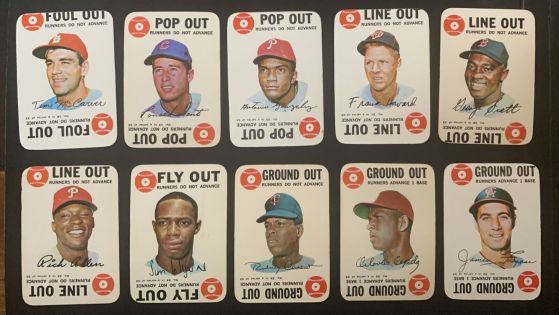
My best friend and I pooled game cards (mostly his). When we had a pile several inches thick, we created teams of made up players, and flipped the deck of cards to play simulated 9-inning games, reshuffling as needed. I was in charge of scorekeeping and computing player stats. As our season wound down, my center fielder and clean-up hitter, Straighty Ruler, was in a tight battle for the batting crown. For the final few games I moved him up to the lead-off spot to pick up a few extra turns at bat.
I Have Seen the Future in My Past
If meticulously keeping these artificial stats wasn’t enough of a clue to my future, my choice of player name, Straighty Ruler, should have been.
In hindsight, my love of baseball stats was completely consistent with my notebooks full of data collected on coin flips (single and multiple) and dice throws. Consistent also with my practice of sitting at my Underwood with a clean sheet of paper and typing the result of every Patriots play as it was announced on the radio: Jim Nance up the middle for a gain of 3 yards. Joe Kapp sacked for a loss of 10 yards.
Eventually, it translated into my keeping stats for my father’s high school girls’ basketball team and calling in game summaries to the town newspaper.
In 1985 when I had access to an IBM PC for the first time, in addition computing statistics for the little research project we were conducting in a St. Paul elementary school, I wrote programs to track and project Wade Boggs’ hit totals over the course of his 240-hit season (.368 BA).
At various points over the years I have used trips to the baseball card store as rewards for meeting goals in my personal behavior modification programs.
I love my MLB app and all of the stats and information it offers – arguably, the best sports app ever created.
And when I entered a ballpark, my first stop was always the booth with the man selling programs to pick up my scorecard and little pencil.
For the Love of the Game
A stat too far.
In the beginning, I embraced Bill James and the new era of baseball statistics. I was a proponent of Moneyball, the concept, the book, and, of course, the movie – pairing Brad Pitt and Jonah Hill as the modern-day Abbott and Costello: Who’s on first? Scott Hatteberg!
Over time, however, stats and analytics came to dominate and almost destroy the game I loved – much in the way as teaching to the test and focusing on a test score as the primary outcome of education. Winning baseball games and increased student achievement are admirable goals, but not at any cost or by any means necessary.
In schools and in baseball, we cannot focus on statistics so much that we lose sight of the game on the field. The unintended consequences are too severe.
Celebrate Opening Day!
Celebrate all of those annual statistics refreshed and reset to their starting points.
Celebrate, relish, and enjoy the game!
Most of all, cherish the people with whom you share your love of the game, the new season, or this Easter weekend.
 Embrace the Absurd
You must be logged in to post a comment.